






How to Trim Your Pet’s Nails Without Stress — okay, real talk, trimming your pet’s nails can feel like defusing a bomb. One wrong move and it’s drama central: flailing paws, anxious whining, maybe even a dramatic escape under the couch. But what if I told you it doesn’t have to be that way?
If you’re tired of playing hide-and-seek every time the nail clippers come out, you’re in the right place. I’ve been there, literally chasing my dog around with clippers while he looked at me like I was a villain. But over time, I figured out how to make it way less stressful for both of us.
So grab your clippers, a few treats, and maybe your pet’s favorite blanket. Let’s break this down step-by-step so your furry friend stays calm and your furniture stays scratch-free.
Why Nail Trimming Matters (and How Often to Do It)
Nail care means happy paws. We often overlook pet nails, but they play a huge role in comfort and mobility. Long nails can cause joint stress and misalignment, painful walking or limping, and accidental injuries to you or them.
How often should you trim? Dogs every 3 to 4 weeks. Cats every 2 to 3 weeks, especially indoor cats. Rabbits or guinea pigs every month or as needed. If you hear clicking on the floor when they walk, that’s your sign.
Tools You’ll Need Before You Start
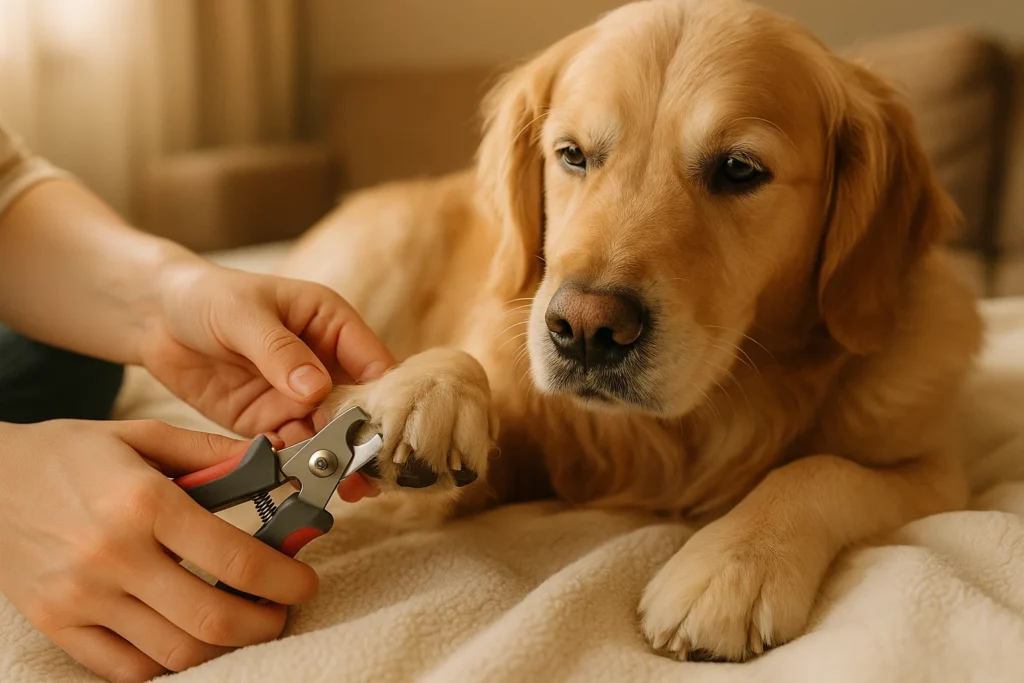
The right gear makes all the difference and helps avoid turning this into a wrestling match. You should have pet nail clippers (scissor-style for dogs, guillotine-style for cats), styptic powder or cornstarch in case of bleeding, treats, a towel or blanket for gentle restraint, and optionally a pet nail grinder for smoothing.
Human clippers are a big no-no. They can crush the nail and cause pain.
Step-by-Step: Stress-Free Nail Trimming
Let’s do this one paw at a time.
1. Set the Scene
Find a quiet, cozy spot with no distractions. Use the same space every time so your pet builds familiarity. For smaller pets, your lap or a counter with a non-slip mat works well. For bigger dogs, the floor with a towel works best.
2. Get Them Comfortable with the Tools
Before you even snip, let your pet sniff the clippers. Touch their paws gently while praising and giving treats. No cutting yet, just desensitizing. Do this a few times a week for a couple of days, especially if your pet’s skittish.
3. Learn Where to Clip
Avoid the quick, the pink area inside the nail that contains blood vessels. Cutting it hurts and causes bleeding. For light nails, you can see the quick, so cut 2 to 3 mm away from it. For dark nails, trim a little at a time and look for a gray or white center, stopping before you see a pinkish center.
4. Start with One Nail
There’s no pressure to do all nails in one go. Start with a single nail, then treat and praise generously. Some pets are okay with two paws in one session, others may need a break after each nail.
5. If You Cut the Quick
It happens even to pros. Stay calm, apply styptic powder or cornstarch directly to the nail, hold pressure for 30 to 60 seconds, comfort your pet, and take a break. Your pet will feed off your energy, so stay relaxed and move slowly.
Tips to Make the Process Easier Over Time
Trim after a walk or bath so nails are softer. Use a calming spray or diffuser like Feliway for cats or Adaptil for dogs. Desensitize paws daily by handling them during cuddle time. Use positive reinforcement with treats, praise, and maybe a post-trim play session so your pet starts to look forward to nail time.
Nail Grinders: Yay or Nay?
Nail grinders smooth out sharp edges and reduce the risk of cutting the quick, but some pets dislike the sound. They provide a smooth finish, better control on dark nails, and work well for thick or hard nails. However, they take longer, can get hot if held in one place too long, and the sound might spook your pet. Let your pet hear the grinder first and reward them just for tolerating the noise.
Special Tips for Cats
Cats can be opinionated. Wrap them gently in a towel like a purrito. Only trim the sharp tip and avoid the quick. Use treats like Churu or tuna as distractions. Avoid trimming during zoomies or nap time and choose a calm moment. If your cat refuses entirely, call your vet or a groomer.
On-the-Go? Nail Care While Traveling
If you’re traveling, pack a small pair of clippers, a mini bottle of styptic powder, and a soft file if clipping isn’t an option. You can also schedule a quick stop at a groomer before your trip.
Mistakes to Avoid
Rushing the process. Trimming too far too fast. Neglecting dewclaws, the side nail that grows quickly and curves in. Not trimming at all, which lets the quick grow out and makes future trims harder. Consistency is more important than perfection.
Nail Maintenance Schedule
Dogs every 3 to 4 weeks and listen for nail clicks on the floor. Cats every 2 to 3 weeks, using a soft grip and quick trims. Rabbits monthly, checking with a light source to find the quick. Guinea pigs monthly or bi-weekly, using baby clippers if needed.
Real Talk: It Gets Easier
The first time you trim your pet’s nails might be chaos. The second time will be slightly better. By the third or fourth time, your pet will start to trust the process and you’ll feel more confident. Eventually, your pet may just sit there calmly while you work.